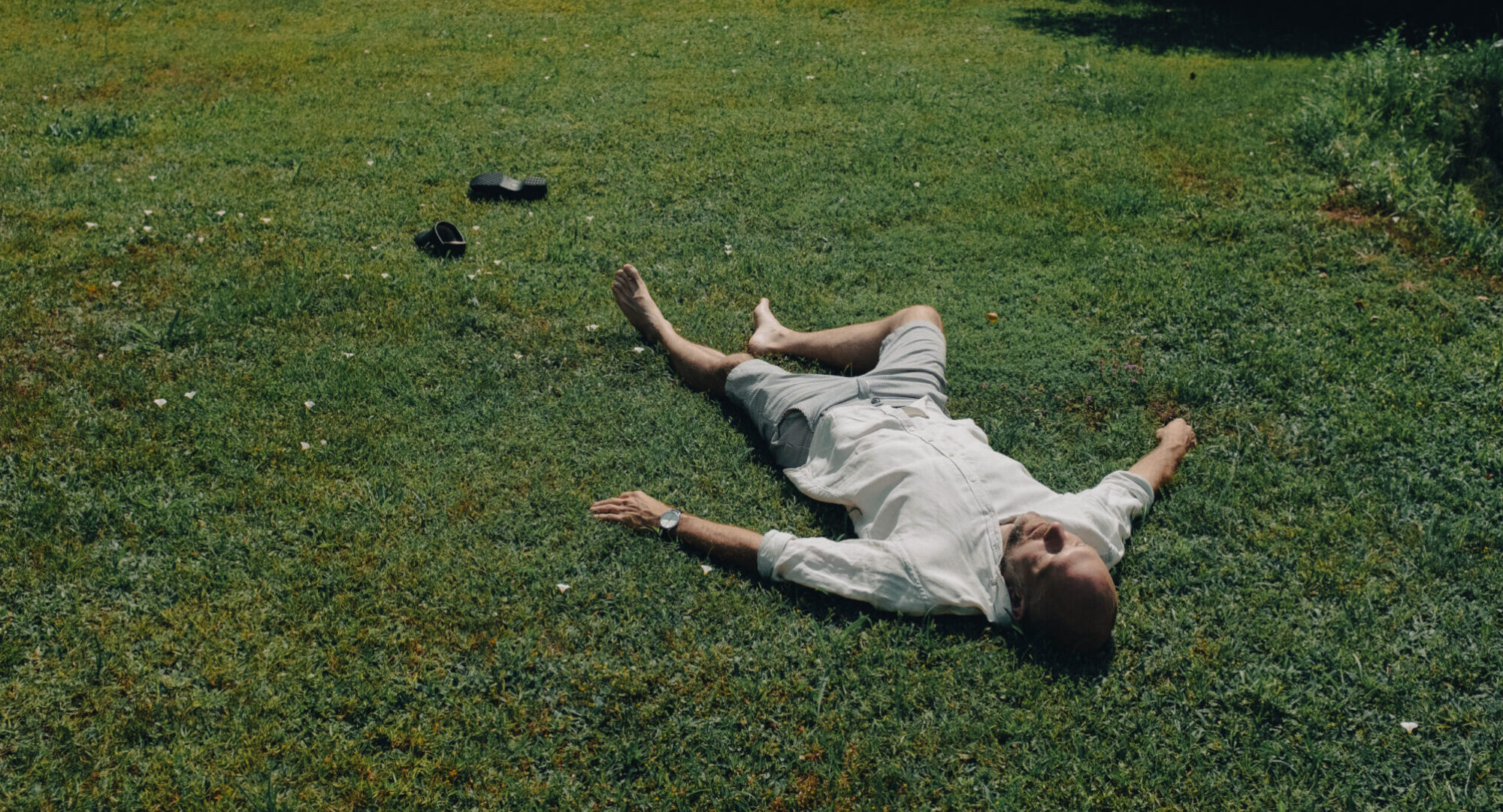
Meditation practitioners often talk about their “practice.” They might ask each other: “How is your practice going?” Usually the question covers whether one meditates regularly. That is, “on the pillow.”
But one thing is the practice we do on our meditation cushion or chair. Another is how we bring the formal meditation practice into life.
In this clip from the film Smoke Paul Benjamin (William Hurt) looks through Auggie Wren’s (Harvey Keitel) many, many photo albums. Auggie owns a tobacco shop in Brooklyn, and every morning at exactly 8 a.m. he takes a picture of the shop from the opposite corner. It’s his project, his life’s work, and the reason he hasn’t taken a vacation in years. Auggie has to be in the exact same place at the exact same time every morning to take his picture.
Overwhelmed by the number of photographs, Paul quickly flips through the albums. To him, the pictures look the same. But Auggie suggests he slow down..
It’s true that the images are in a way the same, but each one is also different from the next. The light is different, the weather is different, the people are different.
The hamster wheel of habit
Auggie’s advice to slow down and observe more attentively is also good advice for us as we take our “practice” into practice. If we don’t make a conscious effort, we can all too easily end up living the same way Paul does when he goes through Auggie’s piles of images: rushed and out of touch with the finer nuances of the experience.
We are creatures of habit and many things quickly start to seem the same to us. Large parts of today’s day seem identical to yesterday’s. We get up at the same time, eat the same thing for breakfast, take the same route to work and perform more or less the same tasks at work.
Our brain loves habits. In fact, it tries to make as much of our daily lives as possible routine. Remember when you learned to ride a bike or drive a car? There was nothing routine about it! It required all your attention, and yet you fell off the bike or changed gears without stepping on the clutch. It took a long time to learn. But what about now? You probably hardly have to think about the process anymore. Your body knows how to do it. Riding a bike or driving has become a habit.
It’s kind of clever that the brain is so good at creating routines. It frees up a lot of attention. The question is, what do we use this mental surplus for? Maybe we listen to the radio in the car or talk to a friend on the phone. But what happens in those moments when there’s nothing to listen to and no one to talk to?
Our tendency is to start daydreaming. That’s exactly what our brain wants us to do, and many of us have a hard time breaking this habit. The mind wanders. All the time.
The wealth of this moment
The constant movement of the mind, with new thoughts and feelings, becomes very evident during meditation. We may be able to keep our attention on the breath for 15 seconds before our thoughts take us away. And then it may be several minutes before we return to reality and the present moment.
The purpose of meditation is to remain present in the immediate experience as it unfolds here and now. Practicing with life is no different..
When we practice with life, our first task is to be aware, present, and conscious of what is happening right now. To know our experience as it is. How the body moves, how the air feels, what emotions are present, and so on.
And if we get lost in thought, our job is simply to discover that we are lost in thought, and then return to the present.
On the surface, everyday life may seem identical to something we have experienced a hundred or a thousand times before. But like Paul, we always have the opportunity to slow down and take a closer look at what is before our eyes, ears, nose, mouth, and body. Each moment is always new and different from all previous moments. Maybe not in a very obvious way, but it is completely fresh and new. How could it be otherwise?
If we are truly attentive, we discover that beneath the seemingly familiar surface lies a wealth of layers that we have never experienced before. Different light, different weather, different people.
When we practice in life, our task is to open ourselves to and be aware of this immediate experience as it unfolds right now. To be present. To listen, taste, smell, hear, and feel what is happening in this moment. That is the first step in practicing with all of life.
Suggestions for a daily life practice
Choose an activity that you do every day but rarely pay much attention to. It could be making breakfast, tying your shoes, brushing your teeth, taking a bath, or something else entirely.
Then try to be fully present in the activity. Really notice your movements, the sounds around the action, how it feels to do it, and possibly its taste or smell.
Also, be aware of when your mind moves away from the activity and into the world of imagination. This will almost certainly happen. Also note this as part of the experience.
If you need help practicing with life, read more here:
Or contact me at: clausen.jon@gmail.com